Cystic Fibrosis: A Legacy
Between 2008 and 2012, Ancestris and Frédéric Lapeyre contributed to Nadine Pellen’s PhD thesis on cystic fibrosis.
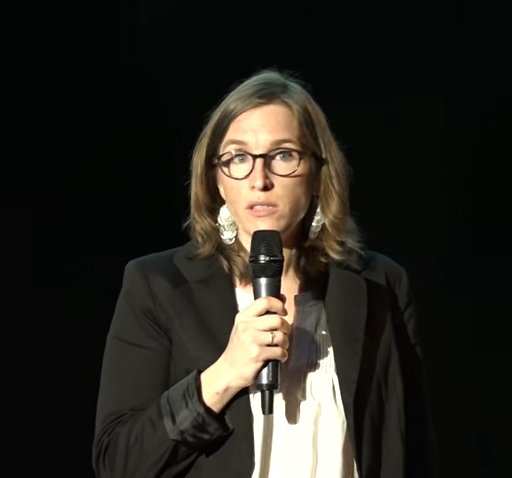
In 2026, fourteen years after her defence, Nadine still has fond memories of this collaboration between a researcher and a volunteer developer, which she describes as a successful example of open-source software adapting to complex scientific needs.
Context
Nadine Pellen discovered Ancestris (known as GenJ before June 2010) at the start of her PhD thesis, which focused on the genealogical networks and family structures of cystic fibrosis patients in Brittany. She had initially been using Hérédis, but needed a tool capable not only of visualising family trees, but also of extracting data from them to build a relational database that could be analysed statistically.
The partnership with Ancestris
- She contacted the developers, in particular Frédéric Lapeyre, whom she had met in Paris.
- He developed several bespoke reports, not found in any other genealogy software, enabling the automated coding of individuals: a unique identifier for each patient (1 to 1287), maternal/paternal family numbers, Sosa-style codes, generation codes, and the identification of patients, carriers, founders and semi-founders.
- This coding system eliminated manual errors, anonymised the data, and enabled a CSV export that could be used in Excel and subsequently via statistical software.
Excerpt from the thesis (pp. 107–118)
Technically:
- Codification: numbering algorithms (Sosa-Stradonitz, family numbers, generation numbers).
- Genealogical analysis indices: completeness (Cᵢ), implexity (Iᵢ), genealogical depth/entropy, inbreeding coefficient (Wright’s formula).
- Comparison of two populations (189 carrier lineages vs 141 non-carrier lineages) based on demographic criteria (endogamy, consanguinity, migration, mortality).
- Mapping of geographical isolates (using the supplementary tool Granite-Muco, created by Michel Moro), utilising base maps organised by municipality and diocese.
- Difficulties encountered: revising earlier manual work (by M. Chaventré), ongoing updates, choice of technical platform, uncertain reliability of civil status records, and the temporal limitations of genealogical sources (~600 years) compared with the estimated age of the F508del mutation (~3,000 years in Brittany).
To know more
The links below will enable you to find all the available details to gain a deeper understanding of this thesis.
Nadine’s feedback

Nadine’s TEDx talk

Slideshow presented in 2020 at the Maison de la Généalogie

Full text of the thesis

Book: ‘Cystic Fibrosis: A Legacy’

Official publication in "Journal of Cystic fibrosis"
